
Burnout in Healthcare: Why So Many Professionals Are at a Breaking Point

If you work in healthcare, you’ve probably noticed a shift over the last few years.
Colleagues leaving the field. Experienced nurses stepping away earlier than expected. Physicians quietly reducing hours or moving into nonclinical roles.
And maybe you’ve felt it yourself.
You finish a shift and instead of feeling tired, you feel hollow. You catch yourself becoming cynical about patients you used to feel compassion for. You start counting how many years until you can get out.
Many healthcare professionals assume this means they are failing at the job.
In reality, something else is happening.
The system is pushing human nervous systems beyond what they were designed to sustain.
Burnout in Healthcare Is Still Alarmingly High
During the height of the COVID-19 pandemic, burnout among healthcare workers reached levels that shocked even seasoned administrators.
At the peak of the crisis, more than 60% of physicians and nearly half of nurses reported symptoms of burnout, according to data from the Mayo Clinic.
Those numbers have improved slightly since the worst surges.
But the deeper problem has not disappeared.
Across hospitals and clinics in cities like San Francisco and Los Angeles, healthcare professionals continue to report:
chronic exhaustion
emotional detachment from work
increased mistakes and slower thinking
a growing sense that the system is unsustainable
Burnout is no longer an individual problem. It is structural.

When Meaning and Reality No Longer Match
Many people enter healthcare because they want to help people.
They imagine meaningful patient relationships. Moments of healing. Using their expertise to make a difference.
Instead, the daily reality often looks like: Electronic medical records. Insurance documentation. Productivity metrics. Staff shortages. Constant patient messages.
Even clinicians working in excellent systems often find that the administrative burden competes with the very thing that brought them into medicine: patient care.
Over time, that mismatch creates a particular type of stress.
Not just exhaustion. Disillusionment.
The Culture of Pushing Through
Healthcare culture has long rewarded endurance.
Skipping meals.
Working through illness.
Holding urine for hours during a shift.
Taking pride in functioning on minimal sleep.
In some specialties, especially emergency medicine, surgery, and critical care, pushing through becomes almost a badge of honor.
But the nervous system keeps score.
When recovery time disappears, the stress response never shuts off.
And eventually, the body begins to protest.

The Nervous System Was Never Meant to Stay in Emergency Mode
Short bursts of stress can actually improve performance.
During a code or a complex procedure, your body releases adrenaline and cortisol. Your focus sharpens. Reaction time improves. You mobilize resources quickly.
This is healthy.
The problem begins when that state never fully resolves.
Instead of returning to baseline after a stressful event, many healthcare professionals remain partially activated long after the shift ends.
Sleep becomes shallow. Your mind keeps replaying decisions. Your body stays tense.
This is the physiology of burnout: a nervous system that no longer knows how to stand down.

Example: The ER Nurse Who Couldn’t Turn It Off
Maya* had been an emergency room nurse in Los Angeles for nearly a decade.
She was good at it. Calm in chaos. Quick with IVs. The nurse new staff turned to when things escalated.
During the pandemic, the ER became something else entirely.
There were nights when every room was full. Patients lined the hallways. Families begged for updates that no one had time to give.

Tatevik Sarkisian, AMFT
Tatevik supports adults dealing with burnout, anxiety, and the emotional toll of prolonged stress. She works with clients who feel numb, overwhelmed, or chronically activated, helping them understand what their nervous system has been carrying and begin recovering with more compassion, structure, and support.
Maya told herself she could handle it. Healthcare workers are trained to compartmentalize.
But months later, something hadn’t turned off.
She noticed she couldn’t relax even on her days off. Her heart raced when her phone buzzed. Sleep became shallow and restless. When friends talked about their normal jobs, she felt oddly detached.
The moment that stayed with her most wasn’t the worst code or the most dramatic trauma. It was a quiet one.
A patient she had spent hours caring for died just before the end of her shift. Maya walked to her car afterward and realized she felt… nothing.
Not sadness. Not relief. Just numb.
That scared her more than anything.
In therapy, we talked about how burnout and trauma exposure often overlap in emergency medicine. Her nervous system had spent years cycling through high-adrenaline events without enough time to recover.
Through trauma therapy and nervous system work, Maya slowly started noticing changes.
She slept more deeply. Her body stopped bracing every time her phone rang. She began feeling present again with friends and family.
She still cared deeply about her work. But she was no longer living in a constant state of emergency.
*Name and identifying details changed.



Example: The Physician Who Realized Something Had to Change
Dr. Aaron* was a hospitalist in San Francisco.
On paper, his career looked successful.
He had trained at a top program. He worked in a respected hospital. His schedule allowed for reasonable time off compared to some specialties.
Yet over the past year, something inside him had shifted.
Every morning before work he felt a knot in his stomach. He dreaded opening the electronic medical record system. Patient messages piled up faster than he could answer them. Documentation extended hours past the end of his shift.
The hardest part wasn’t the workload. It was the feeling that he was no longer practicing medicine the way he believed in.

Aaron noticed himself becoming more mechanical with patients. Less curious. Less present.
One evening after a particularly long shift, his partner asked a simple question:
“Do you still like being a doctor?”
He realized he didn’t know how to answer.
In therapy, we explored how chronic stress and moral injury can accumulate in healthcare settings. Aaron hadn’t lost his passion for helping people; his nervous system had simply been pushed beyond sustainable limits.
Over time, he began rebuilding parts of his life outside the hospital that had disappeared during training. He reconnected with exercise, took protected time for teaching residents, and learned strategies to regulate the stress response after difficult shifts.
The job didn’t magically become easy. But it became survivable again.
And eventually, meaningful again.
*Name and identifying details changed.



The Early Signs Are Easy to Miss
Burnout rarely arrives all at once. It usually begins with small shifts.
You start feeling more irritable at work. You dread opening the charting system. You notice yourself becoming less patient with colleagues.
Physical symptoms often appear too:
headaches
digestive issues
chronic muscle tension
trouble sleeping after shifts
At first these feel manageable.
But when they continue for months or years, the system starts to shut down in a different way.
Instead of anxiety, many people begin to feel numb.

Daniella Mohazab, AMFT
Daniella works with adults navigating chronic stress, anxiety, trauma, and burnout. She supports healthcare professionals who feel emotionally depleted, overextended, or disconnected from themselves, and helps clients build steadier nervous systems, healthier boundaries, and more sustainable ways of living.
When Burnout Becomes Emotional Shutdown
One of the most concerning stages of burnout is emotional detachment.
Healthcare workers describe feeling:
“I just don’t care the way I used to.”
“I feel like I’m on autopilot.”
“I’m exhausted even when I’m off work.”
This is not laziness or lack of dedication. It is the nervous system protecting itself.
When exposure to stress becomes constant, emotional distance can be the only way the brain knows how to survive.

Alexis Harney, LMFT
Alexis helps clients recover from burnout, trauma exposure, and the long-term effects of living in constant overdrive. She works with healthcare professionals and other high-achieving adults who are used to pushing through exhaustion, and supports them in slowing down, rebuilding capacity, and creating a life that feels more manageable.
What Happens When Burnout Goes Untreated
Left unaddressed, burnout spreads into every area of life.
Physically, people experience chronic fatigue, inflammation, and increased illness.
Relationally, partners and family members often feel the withdrawal first. Communication becomes strained. Irritability increases.
Professionally, burnout contributes to slower decision-making, reduced empathy, and higher error rates.
In healthcare, this has implications far beyond the individual clinician.
Burnout affects patient care, staff retention, and the future of the workforce.
Recovery Requires More Than Self-Care Tips
Many healthcare professionals receive the same advice when burnout appears:
Take a vacation. Exercise more. Practice mindfulness.
While these can help, they are rarely enough by themselves. Burnout recovery usually requires three deeper shifts.

Regulating the Nervous System
The first step is helping the body exit chronic stress mode.
This may include:
regular physical movement
nervous-system supportive therapy
improved sleep routines
structured downtime after shifts
For some healthcare workers, trauma therapy such as EMDR therapy can also be helpful, especially when burnout is linked to repeated exposure to high-intensity events.
Rebuilding Physical and Emotional Capacity
Burnout depletes the body.

Recovery often requires addressing the basics that healthcare culture tends to neglect:
consistent meals
adequate sleep
medical care for your own health
time with supportive people
These sound simple, but many clinicians have spent years functioning without them.
Reconnecting With Meaning
Research from the Mayo Clinic found something interesting.
Healthcare professionals who spent at least 20% of their time on meaningful activities were significantly less likely to burn out.
For some people that means teaching or mentoring.
For others it might be research, advocacy, or leadership.
Sometimes the meaningful activity happens outside medicine entirely.
The point is not to love every part of your job.
It is to ensure that something in your life still energizes you.
Healthcare Systems Must Change Too
Burnout will not disappear through individual effort alone. Burnout is the result of an excessively demanding workplace and individual lack of boundaries with work.
Healthcare organizations must also address the conditions that drive chronic stress.
This includes:
reducing administrative overload
ensuring adequate staffing
providing structured debriefing after critical events
offering accessible mental health support
creating cultures where rest is not seen as weakness
Investing in clinician well-being is not only ethical. It is essential for patient safety and workforce sustainability.

Burnout vs Compassion Fatigue vs Moral Injury in Healthcare
Healthcare professionals often use the word burnout to describe what they’re feeling. But burnout is only one piece of a more complicated psychological picture.
Many clinicians are actually experiencing a combination of burnout, compassion fatigue, and moral injury.
Understanding the difference can help clarify what kind of support is needed.
Burnout
Burnout develops when chronic workplace stress exceeds the nervous system’s ability to recover.
It is typically associated with:
emotional exhaustion
reduced sense of accomplishment
growing cynicism about work
mental and physical fatigue
Burnout is often tied to systemic issues, such as staffing shortages, administrative burden, or unsustainable workloads.
When clinicians say, “I’m just completely drained,” they are usually describing burnout.
Compassion Fatigue
Compassion fatigue is slightly different.
It happens when healthcare professionals absorb the emotional suffering of the people they care for.
Over time, repeated exposure to pain, illness, loss, and trauma can create a sense of emotional depletion.
Healthcare workers experiencing compassion fatigue often notice:
feeling numb toward patient suffering
difficulty feeling empathy
intrusive memories of difficult cases
emotional exhaustion after patient interactions
This is especially common in specialties with frequent exposure to trauma, such as emergency medicine, oncology, and critical care.
Compassion fatigue does not mean you stopped caring.
It means your emotional system has been overloaded for too long.
Moral Injury

Moral injury is a term increasingly used in healthcare research.
It refers to the distress that occurs when clinicians cannot provide the level of care they believe patients deserve due to systemic constraints.
For example:
discharging patients too quickly due to bed shortages
watching administrative priorities override patient care
working in environments where safety or ethics feel compromised
Moral injury creates a specific type of emotional conflict.
It’s not just exhaustion. It is the feeling of being forced to participate in a system that violates your professional values.
Many clinicians describe moral injury as the moment when they begin questioning whether they can continue in the profession at all.
Why the Distinction Matters
Burnout, compassion fatigue, and moral injury often occur together.
But the solutions may look different.
Burnout may improve with rest, workload changes, and nervous system recovery.
Compassion fatigue may require emotional processing and support for trauma exposure.
Moral injury may require system-level change, boundary-setting, or career reevaluation.
Recognizing which factors are present can help healthcare professionals seek the right type of support.

Why High-Achieving Healthcare Professionals Wait Too Long to Get Help
One of the most striking patterns we see in therapy with healthcare professionals is how long people wait before asking for support.
By the time many clinicians reach out, they are already deeply depleted.
Why does this happen so often?
The Culture of Competence
Healthcare training reinforces the idea that competence means pushing through difficulty.
Medical school, residency, and clinical practice all require extraordinary endurance.
You learn to function while tired.
You learn to suppress your own needs.
You learn to prioritize patients above everything else.
These traits can make someone an excellent clinician.
But they can also make it harder to recognize when support is needed.
The Fear of Looking Weak
Many healthcare professionals worry that admitting burnout will be interpreted as failure.
They fear:
being judged by colleagues
losing professional credibility
appearing incapable of handling the job
As a result, they often try to solve the problem alone.
Unfortunately, burnout rarely improves through willpower alone.
The Habit of Self-Neglect
Ironically, healthcare professionals often give exceptional care to others while neglecting their own well-being.
It becomes normal to:
skip meals
ignore exhaustion
delay medical care
minimize emotional stress
Over time, the nervous system becomes accustomed to running on empty.
The “I’ll Just Get Through This Month” Trap
Burnout often develops gradually.
People tell themselves:
“Things will calm down after this rotation.”
“Once staffing improves, it will get better.”
“After this busy season, I’ll take care of myself.”
But in many healthcare environments, the pressure rarely fully resolves.
Months turn into years before clinicians realize how depleted they have become.

Early Support Changes the Trajectory
When burnout is addressed early, recovery tends to be faster and more complete.
Therapy can help clinicians:
regulate chronic stress responses
process traumatic experiences from clinical work
reconnect with meaning and identity outside of medicine
make thoughtful decisions about career sustainability
Seeking help is not a sign of weakness.
It is often the most responsible decision a clinician can make for themselves and their patients.
If You’re a Healthcare Professional, Don’t Wait Until You Break
Many clinicians seek help only after burnout becomes severe.
They wait until the exhaustion becomes unbearable or until medical leave feels inevitable.
But earlier intervention is far more effective.
If you are noticing the early signs of burnout, therapy can help you stabilize your nervous system, process work-related stress, and figure out what needs to change.
You do not have to carry the weight of this profession alone.

FAQs About Burnout in Healthcare
Why are healthcare workers so burned out?
Healthcare burnout is driven by a combination of high emotional demand, chronic understaffing, administrative burden, and exposure to trauma. Many clinicians also work in environments where long hours and self-neglect are normalized. When these pressures accumulate without adequate recovery time, the nervous system can remain in a constant stress response, leading to exhaustion, emotional detachment, and decreased job satisfaction.
Is burnout the same as depression?
Burnout and depression can overlap, but they are not identical. Burnout is typically connected to chronic workplace stress and often improves when working conditions change or recovery occurs. Depression is a broader mental health condition that affects multiple areas of life regardless of environment. However, severe burnout can increase the risk of depression, which is why early support and treatment are important.
What are early warning signs of burnout in healthcare professionals?
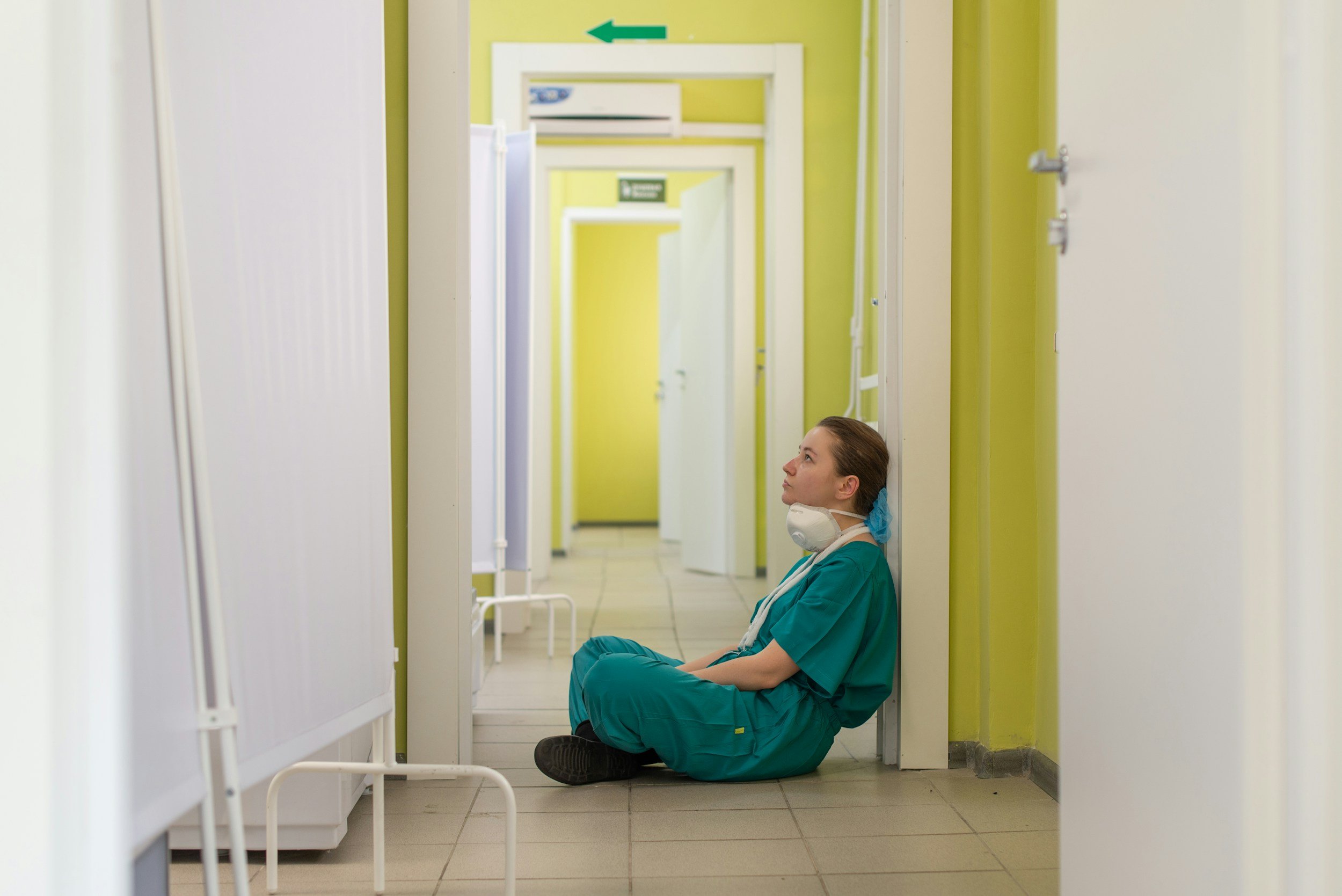
Common early signs include sleep disruption, irritability, difficulty concentrating, emotional detachment from patients, physical fatigue, and feeling overwhelmed by routine tasks like charting or messaging. Many clinicians also notice a growing sense of cynicism about work or a loss of the meaning that once motivated them.
Can therapy help with healthcare burnout?
Yes. Therapy can help healthcare professionals regulate the nervous system, process exposure to high-stress or traumatic events, and develop strategies for recovery. Approaches such as trauma-informed therapy or EMDR therapy can be particularly helpful when burnout is connected to repeated exposure to critical incidents, patient loss, or moral distress.
When should a healthcare worker consider taking burnout seriously?
Burnout should be taken seriously as soon as symptoms start affecting sleep, relationships, job performance, or emotional well-being. Waiting until burnout becomes severe often leads to longer recovery times or the need for medical leave. Addressing the early signs can prevent deeper exhaustion and help clinicians regain stability more quickly.
Burnout Therapy for Healthcare Professionals
At Laurel Therapy Collective, we work with physicians, nurses, and healthcare professionals experiencing burnout, trauma responses, and chronic workplace stress.
Our therapists provide burnout therapy and trauma therapy in San Francisco, Los Angeles, and Santa Cruz, and throughout California and Florida.
If your work in healthcare has started to feel unsustainable, support can help you regain clarity and stability.
Schedule a free consultation to explore therapy for burnout and learn how to begin recovering your energy, focus, and sense of purpose.








At Laurel Therapy Collective, we offer more than burnout support for healthcare professionals. Our team also provides trauma therapy, EMDR therapy, holistic therapy, couples therapy, teen therapy, LGBTQ-affirming therapy, and therapy for high-achieving professionals who are trying to recover from chronic stress without losing themselves in the process. Because burnout is often connected to deeper patterns like perfectionism, over-functioning, and nervous system dysregulation, we help clients address both the surface symptoms and the underlying causes.

Burnout has become so common among high achievers that many people assume it is simply part of adulthood. Feeling exhausted all the time? Normal. Struggling to concentrate? Normal. Dreading work but pushing through anyway? Also normal.
Except it is not.