
Is Your Nervous System Addicted to Data? What Health Tracking Can’t Tell You
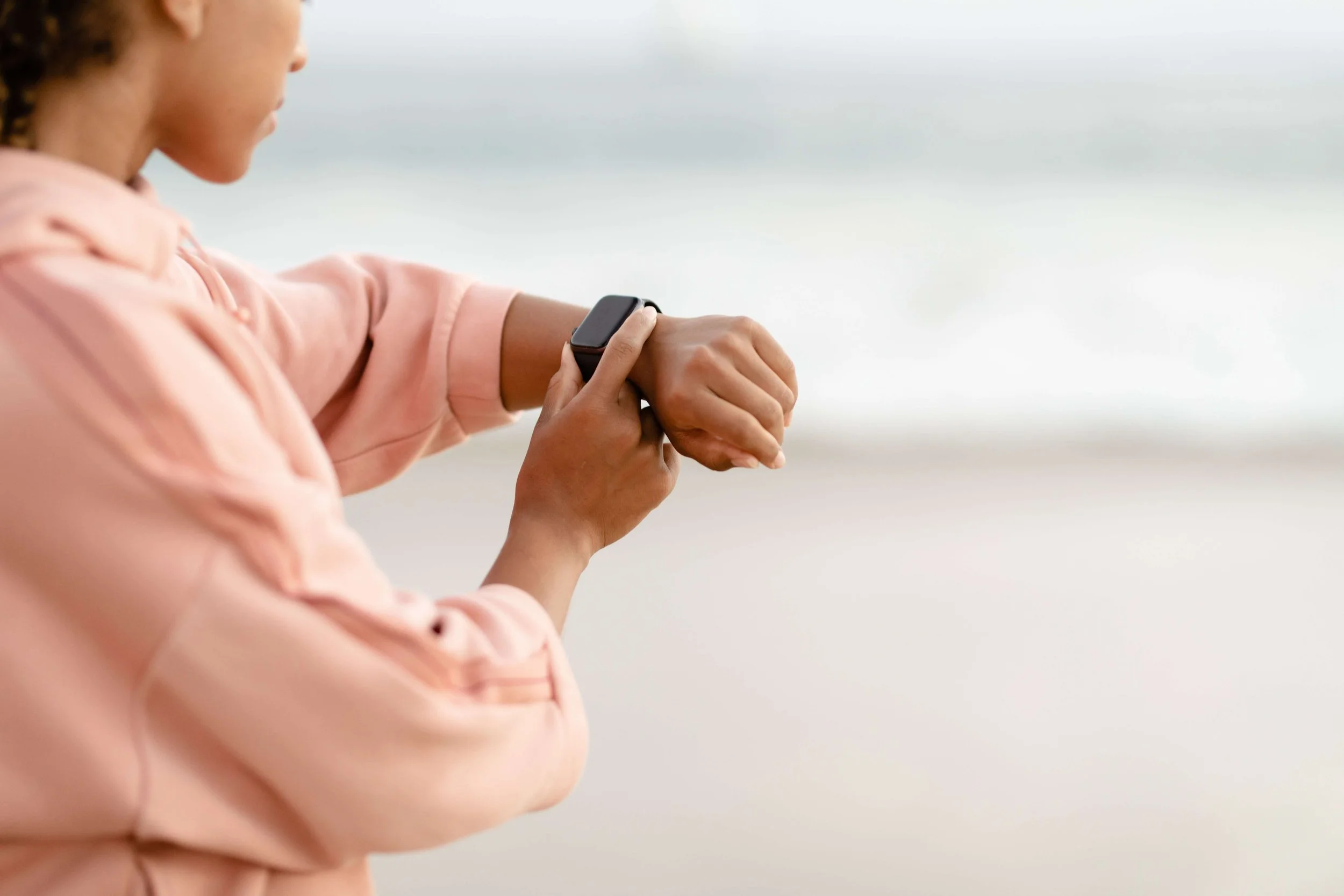
You wake up and the first thing you do is check your sleep score.
It was 74. Lower than yesterday. You had a restless night and now you have the data to prove it.
By the time you’ve had coffee, you’ve reviewed your HRV, your resting heart rate, your overnight SpO2, and the app’s verdict on whether your body is “ready” for the day.
And somehow, none of it makes you feel better.
Health tracking technology is everywhere now. Wearables, continuous glucose monitors, heart rate variability apps, sleep analyzers. The promise is simple: more data means more control. More control means less anxiety.
For a lot of people, the opposite happens.
The data doesn’t create safety. It creates a new loop. And understanding why that loop forms, and how to break it, is something holistic therapy can genuinely help with.

Tatevik Sarkisian, AMFT
Tatevik works with adults managing anxiety, chronic stress, and the nervous system patterns that make it hard to feel okay in their own body. She brings a warm, grounded approach to helping clients reconnect with their internal experience rather than outsourcing it to data, devices, or external validation. She sees clients online throughout California.
A Quick Answer: Can Health Tracking Make Anxiety Worse?
Yes, for some people, it can. Health tracking is not inherently harmful. The problem is when the nervous system starts depending on it.
When checking your data becomes a way of managing anxiety rather than gathering information, the behavior shifts from monitoring to regulation. The tracker stops being a tool and starts functioning like a regulator, something your nervous system consults to decide whether it’s safe to relax.
Once that shift happens, the data is never quite enough. A good score brings temporary relief. A bad score confirms something is wrong. And the checking continues.
This pattern can show up as:
checking metrics multiple times per day
feeling anxious when the device is uncharged or unavailable
interpreting normal readings as warning signs
needing a “good” score before feeling okay about the day
overriding how you actually feel based on what the data says
If any of that sounds familiar, it’s worth understanding what’s actually happening in your nervous system. You can also read our related post on the emotional toll of constant health tracking.
Information vs. Regulation: A Key Distinction
There’s a meaningful difference between using data as information and using data as regulation.
Information is neutral. You check your sleep data, note a trend, adjust something, and move on. The data informs a decision. It doesn’t determine your emotional state.
Regulation is different. When you’re using data to regulate your nervous system, the check itself is the point. You’re not asking “what does this tell me?” You’re asking “am I okay?”
That question, asked repeatedly and answered by a device, is a form of reassurance-seeking. And reassurance-seeking, as any anxiety therapist will tell you, tends to make anxiety worse over time, not better.
The reason is straightforward: reassurance provides short-term relief but doesn’t change the underlying belief that something might be wrong. For more on this dynamic, our post on reassurance in relationships covers the same loop, just in a different context.
What This Often Looks Like

Alexis Harney, LMFT
Alexis works with high-achieving adults who are exhausted by the mental labor of managing their own anxiety. She specializes in trauma-informed, holistic approaches that help clients stop outsourcing their sense of safety and start rebuilding it from the inside out. She sees clients online throughout California and Florida.
Health tracking anxiety doesn’t always look dramatic. Often it’s subtle. You might recognize yourself in some of these:
You feel vaguely off until you’ve checked your numbers for the day
A low HRV or poor sleep score can derail your mood or plans
You feel guilty exercising on a “not ready” day, even when your body feels fine
You’ve started tracking more metrics over time, not fewer
You spend time researching what a reading might mean, then researching more to calm the first search
You feel anxious when you forget to wear your device overnight
You trust the app’s read on your body more than your own sense of how you feel
You notice that a good score brings relief, but only until the next check
That last one is especially important. If a good score only produces temporary calm, that’s a reassurance loop.
Why the Nervous System Outsources Safety to Numbers
The nervous system is wired to scan for threat. When it detects something uncertain or potentially dangerous, it looks for evidence that things are okay.
For most of human history, that evidence was physical: Is the environment calm? Is my body functioning? Am I around safe people?
Now we have a new category of evidence: data. And data is compelling to an anxious nervous system because it feels objective. It feels like proof.
Your nervous system may be outsourcing safety to numbers because the body’s own signals have started to feel unreliable. This is especially common in people who have experienced trauma, chronic stress, or burnout. When you’ve learned that your internal experience can shift without warning, external data can feel more trustworthy than your own body.
The result is what might be called a loss of internal reference. You stop trusting internal cues. The question “how do I feel?” gets replaced by “what does the data say?”
Over time, the body loses the ability to self-reference without a prompt. The tracker becomes the regulator. And the nervous system starts asking for proof before it will allow rest.

When Checking Becomes Compulsive
For some people, health tracking behaviors start to overlap with anxiety and OCD tendencies.
Compulsive checking follows a recognizable pattern: a spike of anxiety, a check to reduce it, brief relief, then the anxiety returning. The check feels necessary. Not checking feels intolerable.
This is how data can start functioning like reassurance in an OCD cycle. The checking doesn’t resolve the underlying uncertainty. It temporarily quiets the alarm, but the alarm returns, often louder than before, because the nervous system has learned that checking is the answer.
This can overlap with health anxiety more broadly, where the data isn’t tracked for optimization but for threat detection. A slightly elevated resting heart rate becomes a potential cardiac event. A single night of poor sleep becomes evidence of something wrong.
More information does not always create more safety. In a nervous system already wired for hypervigilance, more data often means more surface area for worry. For a closer look at the anxiety-OCD overlap, our post on Pure-O OCD is a useful companion read.
The Dashboard That Never Said “Go”
Priya* was a project manager at a software company. She’d started using a wearable two years earlier after a difficult bout of insomnia. The device helped at first. She made changes, her sleep improved, and she felt more in control.

Daniella Mohazab, AMFT
Daniella works with adults navigating the quieter, harder-to-name effects of trauma, including the kind that lingers after a person has already done significant healing work. She helps clients identify where their nervous system is still holding on and supports them in completing what didn’t get to finish. She sees clients online throughout California and Florida.
Then the tracking expanded. She added HRV. Then stress tracking. Then a continuous glucose monitor after reading that blood sugar affected cognition. By the time she came to therapy, she was checking five different metrics before deciding how to approach her morning.
On paper, her numbers were generally fine. But Priya had stopped trusting that. A recovery score of 72 felt like a warning. Anything below 80 meant she should scale back. She’d turned down social plans, skipped workouts, and called in slow on days when the data said she wasn’t ready.
What became clear in therapy was that Priya was no longer using data to inform decisions. She was using it to grant permission. Her nervous system had outsourced the question “am I okay?” to a device. And the device, no matter how good her numbers were, never quite said yes.
The work in therapy involved rebuilding her capacity to check in with her actual body rather than her dashboard, and learning to tolerate the uncertainty that came with not having a score to consult.
*Name and identifying details changed.
When Safety Starts to Feel Conditional
One of the clearest signs that tracking has crossed into anxiety territory is when safety starts to feel conditional.
Conditional safety sounds like: “I can relax once I see my numbers.” Or: “If my HRV is good, the day will be okay.” Or: “I just need to check one more thing.”
Real physiological safety doesn’t work this way. Your nervous system doesn’t become calm because an app gave you a green score. It becomes calm through the accumulation of evidence from your actual experience: you breathed, you rested, the threat didn’t materialize.
When safety requires external validation, it’s not really safety. It’s relief that will need to be renewed. And anything that needs to be renewed this frequently becomes exhausting.
This pattern is particularly common in people who are also dealing with burnout. The nervous system is already depleted, and data checking can feel like a reasonable attempt to manage a body that no longer feels reliable. Our post on why your nervous system is fried gets into the physiology of that state in more detail.
The Numbers Were Fine. He Wasn’t.
Marcus* had started checking his glucose levels after a family member was diagnosed with diabetes. He didn’t have diabetes, and his doctor had said there was nothing to be concerned about. But he bought a CGM anyway, telling himself it was just good information to have.
Within a month, the checking had become frequent. He was looking at his glucose after every meal, before exercise, in the middle of the night if he woke up. He’d built a detailed spreadsheet. Normal fluctuations, the kind every person experiences, had started to feel like evidence of a problem.
He described it this way: “The data is fine. I know rationally it’s fine. But I keep needing to look.”
In therapy, it became clear that the checking wasn’t about glucose. It was about a body that had stopped feeling safe. Marcus had a history of medical anxiety going back to adolescence, and the CGM had given that anxiety a precise new object to attach to.
The turning point was when his therapist pointed out that his anxiety spiked not when the numbers were bad, but in the moment before he looked. The dread was built into the act of checking itself.
Therapy helped him reduce the frequency of checks, tolerate the discomfort of not knowing, and eventually reconnect with the difference between curiosity about his body and fear of it.
*Name and identifying details changed.
How Holistic Therapy Can Help
When health tracking anxiety is rooted in nervous system dysregulation, holistic therapy offers a different entry point than standard talk therapy.
Holistic approaches work with the body directly, not just the thoughts and behaviors. The goal isn’t only to reduce checking behavior. It’s to rebuild the internal resources that make external checking feel less necessary.
In practice, this often means:
building capacity to notice and stay with bodily sensations without immediately needing to categorize them as good or bad
developing tolerance for ambiguity, the ability to not know and still feel reasonably okay
working with the nervous system’s actual threat-detection patterns rather than trying to override them with logic
distinguishing between awareness and compulsive monitoring, the former is useful, the latter is driven by fear
For people whose health tracking anxiety overlaps with trauma or chronic hypervigilance, EMDR therapy can also help address the underlying nervous system patterns that make the body feel unsafe to inhabit without constant verification.
Common Misconceptions About Health Tracking and Anxiety
1. “More data means more control.”
Data can inform decisions, but it can’t create felt safety. The nervous system doesn’t respond to information the way the thinking brain does. You can know your HRV is excellent and still feel anxious. You can have a perfect sleep score and still feel dread. Data and nervous system state are not the same channel.
2. “If I just find the right metric, I’ll stop worrying.”
Anxiety doesn’t resolve because you found the right measurement. It tends to migrate. Track sleep, and you’ll worry about HRV. Nail HRV, and cortisol becomes the concern. The tracking isn’t the solution because the underlying anxiety is what’s driving the need to track.
3. “This is just being responsible about my health.”
Responsible health monitoring and anxiety-driven monitoring look similar from the outside. The distinction is in what happens when you don’t check, and what happens when the data isn’t perfect. If the answer to either of those involves significant distress, the monitoring has moved beyond practical into symptomatic.
4. “I should be able to stop on my own.”
Compulsive checking behaviors are driven by nervous system patterns, not willpower. Trying to stop without addressing the underlying anxiety is like removing the smoke detector and calling it a fire safety plan. Therapy helps change the conditions that make the checking feel necessary.
Real Safety Doesn’t Come From a Score
Health tracking technology isn’t the problem. The problem is when a dysregulated nervous system recruits it as a substitute for felt safety.

The data will never quite be enough, because the nervous system isn’t asking about data. It’s asking a deeper question: am I okay? Is it safe to relax?
Answering that question requires a different kind of work. Not more information, but a rebuilt relationship with your internal experience.
Real safety is the ability to remain grounded even when certainty is unavailable. Healing often involves learning to trust your body again, not collecting more proof that it’s functioning correctly.
That kind of work is what holistic therapy is designed for.
Holistic Therapy in San Francisco, Los Angeles, Santa Cruz, and Online Throughout California and Florida
At Laurel Therapy Collective, we offer holistic therapy for adults dealing with anxiety, nervous system dysregulation, and the patterns that keep them stuck in cycles of checking, reassurance-seeking, and conditional safety. Our therapists work with the whole person, not just the presenting symptom.
We see clients in San Francisco, Los Angeles, and Santa Cruz, and online throughout California and Florida. If you recognize yourself in this post, a free consultation is a good place to start.
Schedule a free consultation via our booking page.
FAQs: Health Tracking and Anxiety
Can health tracking make anxiety worse?
Yes, for some people. Health tracking is not inherently problematic, but when the behavior shifts from gathering information to managing anxiety, it tends to reinforce the anxiety rather than resolve it. The checking provides brief relief, but the relief doesn’t last, so the checking continues and often increases. If you notice that your tracking feels compulsive rather than informational, or that not checking causes significant distress, those are signs worth taking seriously. Holistic therapy can help address the underlying patterns.
What is the difference between healthy monitoring and anxiety-driven tracking?
Healthy monitoring is informational: you gather data, notice a trend, make a change, and move on. Anxiety-driven tracking is regulatory: the check itself is the point, and the goal is to feel temporarily okay rather than to learn something. A good test is to ask what happens when you don’t check, or when the data isn’t perfect. If the answer involves significant distress or a compulsion to keep looking, the behavior has moved into anxiety territory.
Why do I feel anxious even when my health metrics are good?
Because the nervous system and the thinking brain are on different channels. You can know your numbers are fine and still feel unsafe, because your body’s threat-detection system isn’t responding to data. It’s responding to older patterns, often ones rooted in chronic stress, trauma, or a learned sense that something is about to go wrong. Good metrics can provide temporary reassurance, but they don’t change the underlying nervous system state. That’s what therapy is for.
Is health tracking anxiety related to OCD?
It can overlap. Compulsive health checking follows the same basic structure as OCD: anxiety spikes, a behavior (checking) is used to reduce it, relief is brief, and the cycle repeats. For some people, this is best understood as health anxiety. For others, particularly those who also notice intrusive thoughts or rigid rituals around the checking, the overlap with OCD is more significant. Our post on Pure-O OCD offers more context, and a therapist who specializes in anxiety can help clarify the pattern.
How does holistic therapy help with health tracking anxiety?
Holistic therapy works with the body as well as the mind, which makes it particularly well-suited to this kind of anxiety. Rather than just building insight or cognitive coping strategies, holistic therapy helps people rebuild their internal resources: the capacity to tolerate uncertainty, the ability to read their own body without fear, and the felt sense of safety that doesn’t depend on a dashboard. For people whose tracking anxiety is rooted in trauma or chronic hypervigilance, EMDR can also address the deeper nervous system patterns that make external data feel so necessary.












Obsessively checking your Oura ring, HRV, or glucose data? Learn why constant health tracking can fuel anxiety and how holistic therapy can help.