
Does EMDR Therapy Work Online? What The Research Says

When EMDR therapy first became widely available online, many people had the same reaction:
Wait… this works over video?
EMDR therapy already feels a little unusual if you’re new to it. You think about a difficult memory while following eye movements or tapping your shoulders, and somehow the memory becomes less distressing.
For many people, the question is not just whether online EMDR is effective. It’s whether it can still feel safe, connected, and deep enough to actually work.
That concern makes sense. Trauma therapy is vulnerable work, and a lot of people worry that meeting through a screen will feel less personal or less grounding.
It’s fair to wonder whether something like that can really work just as well through a screen.
The short answer: yes, it can.
Research over the last several years shows that EMDR therapy delivered through telehealth can be just as effective as in-person EMDR for many people. See bottom of article for citations.
If you're considering EMDR therapy in San Francisco, Los Angeles, Santa Cruz, or anywhere in California or Florida, virtual EMDR may be a practical and effective option.

What Is EMDR Therapy?
EMDR therapy (Eye Movement Desensitization and Reprocessing) is a trauma therapy designed to help the brain process experiences that became “stuck” in the nervous system.
When something overwhelming happens, the brain sometimes stores the memory in a fragmented way. Instead of feeling like something that happened in the past, the memory continues to trigger emotional and physical reactions in the present.
EMDR therapy helps the brain finish processing those experiences.
During an EMDR session, your therapist guides you to briefly focus on a distressing memory while engaging in bilateral stimulation, typically eye movements, tapping, or alternating tones.
This stimulation activates the brain’s natural information-processing system. Over time, the memory becomes integrated and loses its emotional charge.
The memory does not disappear.
But it stops feeling like a current threat.
EMDR therapy is widely used for:
• PTSD and trauma
• distressing memories
• relationship trauma
It is effective for adults, teens, and increasingly for children as well.

Daniella Mohazab, AMFT
Daniella is an EMDR therapist in California who supports adults and teens dealing with trauma, anxiety, and relational stress. She takes a steady, thoughtful approach to online EMDR therapy and helps clients feel prepared, supported, and emotionally grounded before moving into deeper processing work.
How Virtual EMDR Therapy Works
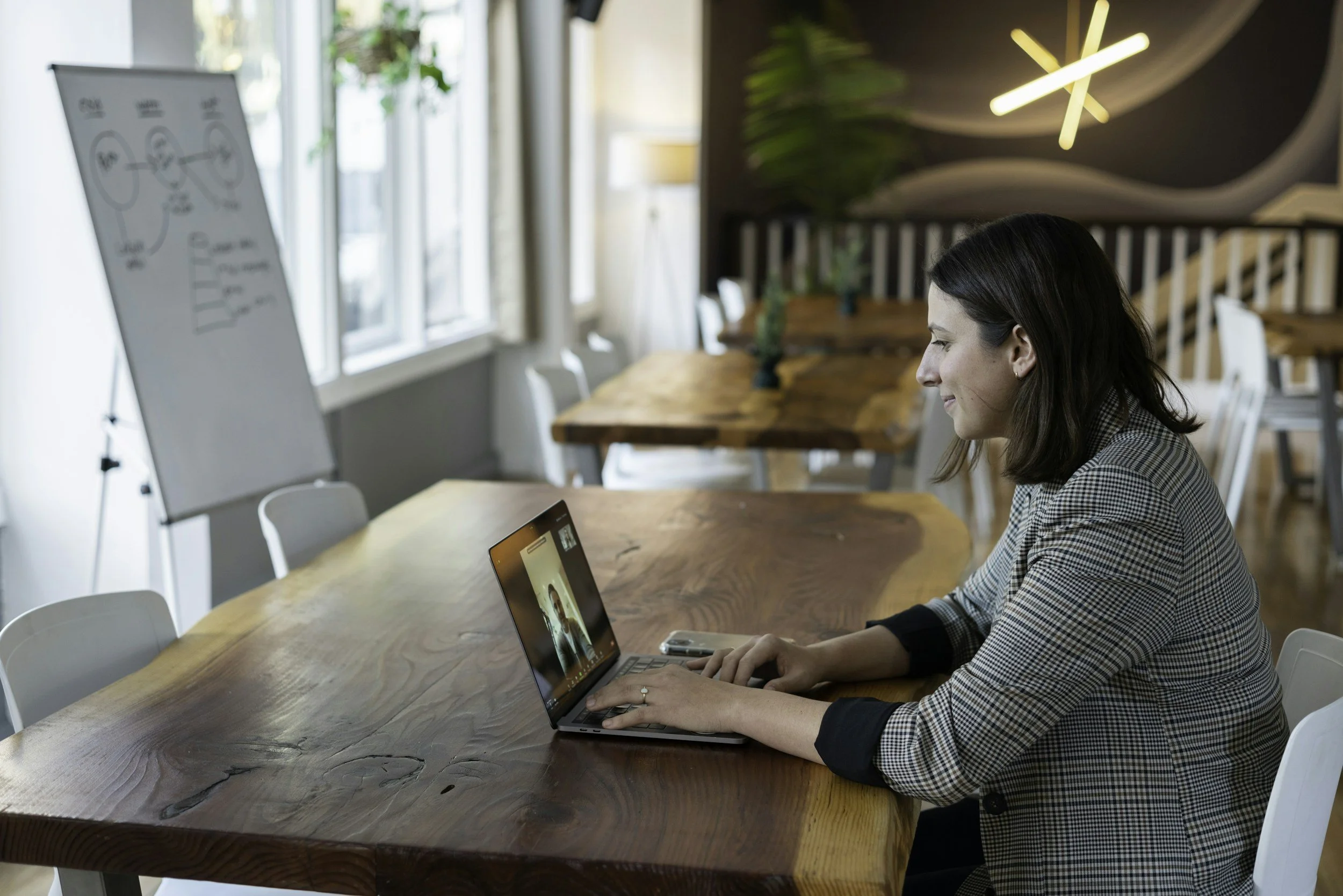
Virtual EMDR therapy follows the same structure as in-person EMDR sessions. The difference is simply that the session takes place through a secure video platform.
Your EMDR therapist will still guide you through the same phases of treatment, including preparation, resourcing, and trauma processing.
Bilateral stimulation can be delivered in several ways online:
• following your therapist’s hand movements on screen
• using alternating audio tones through headphones
• tapping your shoulders or knees
• using specialized EMDR apps or tools
Many clients are surprised to discover that EMDR works very smoothly online.
In fact, some people prefer it.
Being in your own home can make trauma therapy feel safer and more comfortable. You don’t have to navigate traffic, sit in a waiting room, or drive home immediately after an emotionally intense session.
For many clients, that added sense of control actually improves the therapy experience.
Convenience, Safety, and Effectiveness
“Julia” had been avoiding trauma therapy for years because she lived far from any therapist who specialized in EMDR. She assumed virtual sessions would feel awkward or impersonal. Instead, she found that doing EMDR from home made it easier to stay regulated. She could sit with a blanket, adjust the lighting, and have privacy immediately afterward. For her, online EMDR did not feel like a compromise. It felt more manageable than going into an office.

Alexis Harney, LMFT
Alexis is an EMDRIA Certified Therapist™ who works with adults processing trauma, anxiety, and long-standing patterns that haven't responded to other approaches. She stays current on the research and brings that perspective directly into her clinical work. She sees clients online throughout California and Florida.
What the Research Says About Virtual EMDR
Over the past several years, researchers have studied whether EMDR therapy delivered through telehealth works as well as in-person sessions.
The results have been encouraging.
Virtual EMDR Is Highly Effective
A 2022 study comparing virtual and in-person EMDR in a primary care setting found that both approaches led to significant improvements in anxiety and depression symptoms. After adjusting for other variables, there was no meaningful difference in outcomes between the two methods.[1]
Research with veterans has shown similar results. A large multisite review found that both telehealth EMDR and in-person EMDR significantly reduced symptoms of PTSD and depression. Treatment completion rates were also similar across both formats.[2]
In practical terms, this means people are not getting a watered-down version of EMDR just because the session happens online. For many clients, the core ingredients that make EMDR effective — structured processing, good pacing, and a strong therapeutic relationship — can still happen very well through telehealth.
Who Online EMDR Works Especially Well For

people with busy schedules
parents
professionals who don’t want commute stress after sessions
people in areas without local EMDR specialists
clients who feel more regulated at home
people traveling between supported states like California and Florida

Laurel van der Toorn, LMFT
Laurel is a licensed and EMDRIA Certified Therapist™ who works with adults navigating trauma, burnout, and long-standing nervous system patterns. She offers online EMDR therapy for clients in California, Florida, Colorado, Michigan, Texas, and Washington, and helps people access deep trauma work in a way that fits real life.
What Trauma Therapists Notice About Online EMDR
Research surveys of EMDR therapists show that most clinicians consider virtual EMDR both feasible and effective.
In one study, therapists reported that their clients experienced meaningful reductions in distress during online EMDR sessions that were comparable to in-person treatment.[3]
In our own experience as trauma therapists, we often see an additional benefit.
Many clients feel more relaxed and in control doing EMDR therapy in their own space. They can sit in a familiar environment, adjust their surroundings, and take time to decompress after sessions.
And perhaps most importantly, they don’t have to get into a car and navigate traffic immediately after processing a difficult memory.
EMDR for Teens
EMDR for teens can also be delivered virtually. Research shows that EMDR is effective for children and adolescents with trauma, and early studies suggest that virtual delivery works well for this age group too. [4, 5, 6] This is important for families outside areas like San Francisco and Los Angeles, where access to specialized trauma therapy for teens may be limited.

Benefits of Virtual EMDR Therapy
Virtual EMDR therapy offers several advantages that make trauma treatment more accessible.
Accessibility
You can work with an EMDR therapist in San Francisco, Los Angeles, or Santa Cruz even if you live elsewhere in California or Florida.
This is especially important for people who want a therapist with specialized trauma training.
Convenience
Online therapy eliminates commuting, parking, and travel time. Many professionals and parents find it much easier to maintain consistent therapy when sessions fit smoothly into their schedule.
Comfort
Some people feel safer doing trauma work in their own home. Having familiar surroundings can make it easier to regulate emotions during EMDR sessions.
Continuity
Virtual EMDR allows therapy to continue during travel, illness, or schedule changes. That continuity can be especially important when doing trauma processing.




Are There Any Downsides to Virtual EMDR?
While virtual EMDR therapy works well for many people, it may not be the right fit for everyone.
Some clients prefer the physical presence of an in-person therapist. Others may have difficulty finding a private space at home where they feel comfortable doing trauma work.
Technical issues—such as unstable internet connections—can also interrupt sessions occasionally.
However, most therapists can help clients troubleshoot these challenges, and many people find that the benefits of virtual EMDR outweigh the drawbacks.
When In-Person EMDR Might Be a Better Fit
Virtual EMDR therapy works very well for many people, but it is not the perfect fit for everyone. In some situations, in-person therapy may feel safer, more containing, or simply easier to engage with.
For example, in-person EMDR may be a better option if:
you have significant dissociation and need more in-room support to stay present
your home environment feels chaotic, unsafe, or emotionally activating
you do not have access to a private space where you can do vulnerable work comfortably
your internet connection is unreliable enough to interrupt the flow of sessions
you know that physical presence helps your nervous system feel more grounded
Some people also simply prefer being in the room with a therapist. That preference matters.
There is no prize for forcing yourself into a format that does not feel workable.
A good trauma therapist should be able to talk with you honestly about whether online EMDR is likely to be a strong fit for your needs, your history, and your current environment. In some cases, people start virtually and do wonderfully. In other cases, they realize they would feel more supported in person. Neither option is more “serious” or more valid.
What matters is choosing the setting that helps your nervous system engage the work as safely and effectively as possible.

How to Find An Online EMDR Therapist
Proper training is really important. Don't work with an EMDR therapist that hasn't gone through a full EMDRIA-approved training course. We also recommend working with an EMDR therapist who engages in ongoing consultation with and EMDRIA consultant.
Ask potential therapists:
Have you done EMDR online with many clients?
How do you handle grounding and pacing virtually?
What kinds of bilateral stimulation do you use online?
How do you know if someone is a good fit for virtual EMDR?
Do you work with complex trauma, dissociation, or attachment wounds?
If you’re interested in EMDR therapy San Francisco, EMDR therapy Los Angeles, or EMDR therapy Santa Cruz, many therapists now offer both in-person and virtual options. You can search for “EMDR therapist San Francisco,” “EMDR therapist Los Angeles,” or “EMDR San Francisco” and “EMDR Los Angeles” to find providers who offer telehealth. Be sure to ask if they have experience with virtual EMDR and if they work with your specific needs, such as EMDR for teens. You can also try the EMDRIA therapist directory.
What to Expect in a Virtual EMDR Session

Tatevik Sarkisian, AMFT
Tatevik offers online EMDR therapy with warmth, structure, and careful attention to the therapeutic relationship. She supports adults navigating trauma, anxiety, burnout, and life transitions, helping clients feel emotionally supported and better able to process painful experiences from the comfort of home.
A virtual EMDR session is similar to an in-person session. Your trauma therapist will:
1. Make sure you have a private, safe space for therapy.
2. Guide you through the EMDR process using video, sound, or tapping.
3. Check in with you regularly to make sure you feel supported and safe.
You’ll need a device with a camera, headphones, and a stable internet connection. Some therapists may use special apps or tools for bilateral stimulation, but many use simple methods that work well over video.
What a Good Online EMDR Session Should Feel Like
A good online EMDR session should not feel rushed, chaotic, or confusing.
Even when the material is emotionally intense, the session itself should still feel structured, collaborative, and grounded.
You do not need to feel completely calm the whole time. EMDR often brings up meaningful emotions, sensations, and memories. But you should feel like your therapist is tracking what is happening, explaining the process clearly, and helping you stay within a manageable range of activation.
A strong virtual EMDR session often includes:
clear pacing
thoughtful preparation before trauma processing begins
enough grounding and orientation to help you stay present
flexibility in how bilateral stimulation is delivered
regular check-ins so your therapist can assess how you are doing
a sense of closure before the session ends
In other words, you should feel supported, not dropped into the deep end.
A good online EMDR therapist will also help you think through practical details that matter more in virtual work: where you’ll sit, what kind of privacy you have, what support you may want after the session, and what to do if the internet glitches or emotions spike unexpectedly.
Many clients are surprised by how connected online EMDR can still feel. The screen does not have to create distance if the therapist is skilled, attuned, and thoughtful in how they hold the work.
Often, the best sign is not that the session felt easy.
It is that it felt manageable, intentional, and like your therapist knew how to guide you through it.
EMDR Therapy Works Online
The research is clear: EMDR therapy delivered through telehealth can be just as effective as in-person treatment for many people.
What matters most is not whether the therapy happens in an office or through a screen.
What matters is working with a well-trained EMDR therapist who understands pacing, preparation, and trauma processing.
If you are looking for EMDR therapy in San Francisco, Los Angeles, or Santa Cruz, virtual sessions can make it easier to access specialized trauma care from wherever you are.
Trauma recovery does not require a physical office.
It requires the right therapeutic support.
Online EMDR is not a lesser version of trauma therapy. For many people, it is simply the most accessible and sustainable way to do the work well. What matters most is not whether your therapist is in the room with you, but whether they are skilled, attuned, and thoughtful in how they guide the process.
If you are curious about virtual EMDR, the next step does not have to be a big one. It can simply be a conversation about whether this format fits your life, your nervous system, and your goals.
Is Online EMDR Right for You?

Virtual EMDR is a proven, effective option for many people seeking trauma therapy. Whether you’re looking for EMDR therapy San Francisco, EMDR therapy Los Angeles, or EMDR therapy Santa Cruz, you can access high-quality care from home. If you’re unsure, talk to a trauma therapist about your concerns. They can help you decide if virtual EMDR is a good fit for you or your teen.
Online EMDR For People In California, Florida, and Beyond
If you're curious about EMDR therapy or wondering whether virtual EMDR could work for you, our team would be happy to help.
Our therapists provide EMDR therapy in San Francisco, Los Angeles, Santa Cruz, and online throughout California and Florida.
Our team also provides burnout therapy, couples therapy, teen therapy, LGBTQ therapy, and holistic therapy for adults who want care that addresses both the emotional and nervous system impact of stress, trauma, and relationship struggles. Whether you are dealing with anxiety, attachment wounds, burnout, or the lingering effects of painful past experiences, we help clients across California and Florida find an approach that feels thoughtful, effective, and well matched to their lives.
👉 Schedule a free consultation to learn more about how EMDR therapy can help you heal.









Frequently Asked Questions About Online EMDR Therapy
Is online EMDR really as effective as in-person EMDR?
For many people, yes. Research over the past several years suggests that virtual EMDR can be just as effective as in-person EMDR for many types of trauma-related symptoms. The core elements that make EMDR work — good pacing, preparation, bilateral stimulation, and a strong therapeutic relationship — can still happen very effectively through telehealth.
Can EMDR be done over Zoom or video?
Yes. EMDR therapy can be done through secure video platforms using several forms of bilateral stimulation, including following hand movements on screen, alternating audio tones, self-tapping, or specialized online EMDR tools. A trained therapist will help determine what works best for you.
Is online EMDR safe for complex trauma?
It can be, depending on the person and the therapist’s skill level. Many people with complex trauma do very well with online EMDR, especially when the therapist takes preparation, pacing, and nervous system regulation seriously. In some cases, in-person work may be a better fit, particularly if dissociation is severe or the home environment is not emotionally safe.
What if I don’t have privacy at home?
Privacy matters in EMDR therapy. If you do not have a space where you can speak openly and regulate comfortably, online therapy may feel harder. Some people solve this with headphones, white noise, or sessions from a parked car or private office. In other situations, in-person therapy may simply be the better option.
Do I need special equipment for online EMDR?
Usually not. Most people just need a stable internet connection, a device with a camera, and a private space. Headphones are often helpful, especially if your therapist uses alternating tones. Some therapists also use specific online EMDR tools, but many can do excellent work with very simple setups.
Can teens do EMDR online?
Yes. Many teens do very well with virtual EMDR, especially when they feel more comfortable and regulated at home. Online therapy can also increase access for families who do not live near a therapist with specialized EMDR training. As with adults, fit matters; some teens prefer virtual sessions and others do better in person.
How do I know if online EMDR is right for me?
A consultation can help answer that. A good EMDR therapist will consider your trauma history, nervous system regulation, access to privacy, level of dissociation, and personal preferences. The best fit is the one that helps you engage the work consistently and safely.
Citations
Eye Movement Desensitization and Reprocessing in a Primary Care Setting: Assessing Utility and Comparing Efficacy of Virtual Versus in-Person Methods. Telemedicine Journal and E-Health : The Official Journal of the American Telemedicine Association. 2022. Liou H, Lane C, Huang C, et al.
A Multisite Retrospective Review Exploring the Delivery of Eye Movement Desensitization and Reprocessing (EMDR) Therapy to Veterans via Telehealth (TH) Versus in Person (IP). Psychological Trauma : Theory, Research, Practice and Policy. 2025. Fairbanks CLD, Penix-Smith EA, Glitsos SC, et al.New
Group Early Intervention Eye Movement Desensitization and Reprocessing Therapy as a Video-Conference Psychotherapy With Frontline/Emergency Workers in Response to the COVID-19 Pandemic in the Treatment of Post-Traumatic Stress Disorder and Moral Injury-an RCT Study. Frontiers in Psychology. 2022. Farrell D, Moran J, Zat Z, et al.
The Effectiveness of Online Eye Movement Desensitization and Reprocessing 2.0 Group Protocol on Post-Traumatic Stress Disorders Symptoms, Depression, Anxiety, and Stress in Individuals Who Have Experienced a Traffic Accident: A Randomized-Controlled Study. Frontiers in Psychiatry. 2024. Yasar AB, Gundogmus İ, Kubilay D, et al. T
Coronavirus Disease 2019 Emergency and Remote Eye Movement Desensitization and Reprocessing Group Therapy With Adolescents and Young Adults: Overcoming Lockdown With the Butterfly Hug. Frontiers in Psychology. 2021. Lazzaroni E, Invernizzi R, Fogliato E, Pagani M, Maslovaric G.
Supporting Healthcare Workers in Times of COVID-19 With Eye Movement Desensitization and Reprocessing Online: A Pilot Study. Frontiers in Psychology. 2022. Faretta E, Garau MI, Gallina E, Pagani M, Fernandez I.
The Effect of the Online Eye Movement Desensitization and Reprocessing Early Intervention Protocol (EMDR R-Tep) for the Risk Groups With Post-Traumatic Stress Symptoms During the COVID-19 Pandemic. Frontiers in Psychology. 2022. Yurtsever A, Bakalim O, Karaman Ş, Kaya S, Konuk E.
Therapists' Experiences With the Effectiveness and Feasibility of Videoconference-Based Eye Movement Desensitization and Reprocessing. Frontiers in Psychology. 2021. Mischler C, Hofmann A, Behnke A, et al.
An Evaluation of Eye Movement Desensitization and Reprocessing Therapy Delivered Remotely During the Covid-19 Pandemic. BMC Psychiatry. 2021. McGowan IW, Fisher N, Havens J, Proudlock S.

Burnout has become so common among high achievers that many people assume it is simply part of adulthood. Feeling exhausted all the time? Normal. Struggling to concentrate? Normal. Dreading work but pushing through anyway? Also normal.
Except it is not.