
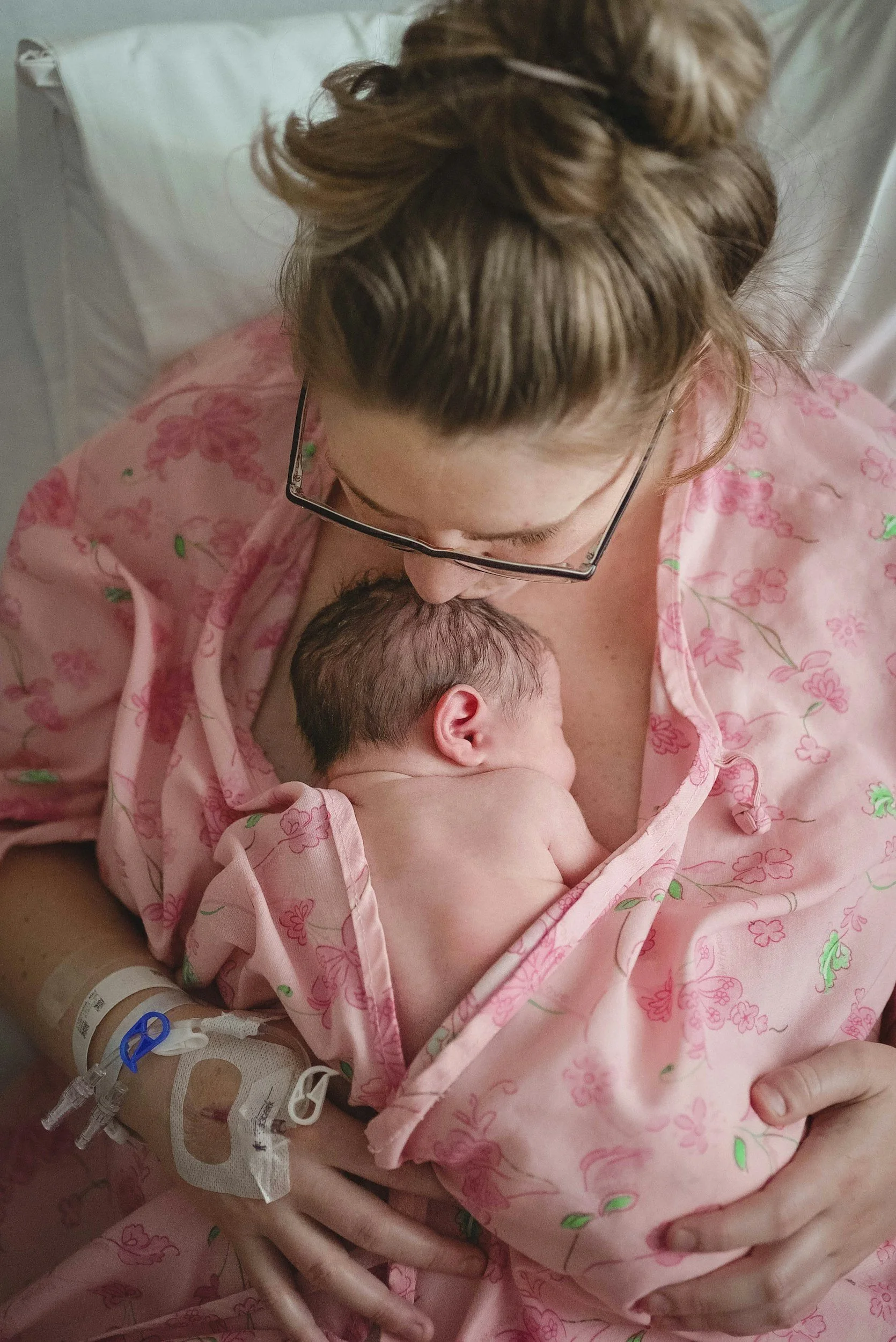
EMDR Therapy for Birth Trauma: How It Works and Who It Helps
Birth is supposed to be one of the most significant experiences of a person's life. What no one prepares you for is what happens when it becomes a source of fear, images that won't leave, or a body that stays braced long after it's over.
Birth trauma is more common than most people realize, and it often goes unrecognized.
The standard cultural narrative about birth tends to flatten complexity: it was hard but worth it, you're healthy, the baby is healthy. That story doesn't leave much room for the person who is still flinching at the memory months later, or who feels disconnected from an experience they spent years imagining.
EMDR therapy for birth trauma is one of the most effective approaches available for processing what happened and reducing its hold on the present. This post explains what birth trauma is, how it takes hold in the nervous system, and how EMDR helps.

A Quick Answer: Can EMDR Therapy Help With Birth Trauma?
Yes. EMDR therapy for birth trauma is supported by a strong and growing body of research, and it is one of the most efficient trauma treatment methods available for this kind of experience. For many people, birth trauma presents exactly the kind of target EMDR processes most effectively: a discrete, high-distress event (or series of events) that left behind intrusive memories, avoidance, and persistent nervous system activation.
A few things worth knowing before going further:
Birth trauma can be addressed by any skilled EMDR clinician. It is not a specialized subspecialty requiring extra credentialing; it is EMDR-based trauma work applied to a specific kind of experience.
EMDR for birth trauma typically takes more than eight sessions. That is the minimum floor, not a typical timeline. Some clients complete the work in a few months; others, particularly those with complex trauma histories or a history of medical trauma that intersects with the birth experience, work longer.
Both physical trauma and emotional trauma from birth are treatable. You do not need to have experienced a medical emergency for the experience to qualify as traumatic.
Partners and support people can also develop trauma responses from birth experiences. That is worth naming and treating as well.
What Counts as Birth Trauma
Birth trauma is not defined by what happened objectively. It is defined by how the nervous system registered the experience.
A person can have a medically uncomplicated birth and still develop a trauma response. A person can have a dangerous delivery and feel okay afterward. The determining factor is not the event itself but the internal experience: loss of control, fear for your life or your baby's life, pain that felt unbearable, feeling unheard or dismissed, or the accumulated weight of multiple difficult moments across a labor that lasted days.
Birth trauma may come from:
Labor and delivery experiences, including emergency interventions, prolonged labor, pain that wasn't adequately managed, or a birth plan that was abandoned under circumstances that felt frightening or chaotic
Pregnancy complications and difficult prenatal news, including a diagnosis of fetal anomaly, threatened miscarriage, preterm labor, or extended bed rest
Pregnancy loss, including miscarriage, stillbirth, or termination for medical reasons
NICU experiences, which often involve the ongoing distress of watching a newborn undergo medical intervention while unable to help
Postpartum PTSD, which can develop even when the birth itself went smoothly, often rooted in postpartum complications, the shock of new parenthood, or pre-existing vulnerabilities that the transition triggered
Partner and support person trauma, which is frequently overlooked; a partner who witnessed a complicated birth, who feared for someone they love, or who felt helpless during an emergency can develop their own trauma response
Anxiety in a subsequent pregnancy, which often involves the reactivation of earlier birth trauma as the nervous system prepares for the possibility of repeating what it survived
EMDR therapy has been used for decades to effectively treat:
Medical trauma, including birth trauma
Post-combat trauma and trauma in first responders
Trauma from natural disasters & terrorist attacks
Phobias and panic attacks
If something else still has a hold on you, ask us about it.
Imagine being reminded of something upsetting and not feeling disturbed at all. With EMDR therapy, that’s possible.

Intrusive memories or flashbacks to specific moments from labor, delivery, or the hospital experience
Difficulty talking about or thinking about the birth without becoming overwhelmed or shutting down
A sense of distance or disconnection from the birth experience, including difficulty accessing the memory at all
Postpartum anxiety or depression that doesn't fully lift, even with good social and medical support and time
Difficulty bonding with a newborn in the early weeks, especially after a traumatic delivery or NICU stay
Fear about future pregnancies or a strong aversion to the idea of going through labor again
Hypervigilance around the baby's health or safety that goes beyond typical new-parent worry
Body-level symptoms: startle responses, tension held in the pelvic floor or chest, difficulty sleeping even when the baby sleeps
A partner who is struggling with their own avoidance, nightmares, or anxiety related to what they witnessed.
Why Birth Trauma Gets Stuck
Trauma is not a character flaw or a sign that someone is weak. It is what happens when the nervous system encounters an experience that exceeds its capacity to process in the moment, and stores it in a way that keeps it accessible as a current threat rather than a past event.
During a frightening birth, the brain's threat-detection system activates and encodes the experience in a fragmented way: sensory details, body sensations, emotional tone, beliefs about what was happening. This is adaptive in the moment. The problem is that these fragments stay stored in a raw, unprocessed state. When something in the present, a particular smell, a sound, the anniversary, another pregnancy, a news story about birth, activates one of those fragments, the nervous system responds as if the threat is happening now.
This is why birth trauma doesn't simply fade with time. The memory isn't filed as something that happened in the past; it stays live.
What Birth Trauma Looks Like
Birth trauma can look a lot of different ways, and it doesn't always look like what people expect from PTSD.
The nighttime waking resolved within two months of beginning processing. The hospital avoidance lifted shortly after. She was able to be present for her sister's pregnancy without it pulling her back into her own.
*Name and identifying details changed.
Laurel van der Toorn, LMFT, EMDRIA Certified Therapist
Laurel is an EMDRIA Certified Therapist and the founder of Laurel Therapy Collective. She works with adults working through trauma, burnout, and life transitions, including the nervous system aftermath of difficult birth experiences. She sees clients online throughout California, Colorado, Florida, Michigan, Texas, and Washington.
What This Looks Like: A Story From the Practice
Maya* delivered her daughter after 36 hours of labor that ended in an emergency cesarean. Both were healthy afterward. Her OB said it had gone as well as it could have given the circumstances, and Maya believed that was true. She felt she had no right to feel the way she did.
Six months later, she was still waking in the night with her heart pounding, unable to remember a dream but unable to get back to sleep. She avoided the hospital, taking a longer route on her commute to bypass it. When her sister announced a pregnancy, Maya burst into tears in the car on the drive home and spent an hour unable to name why.
She came to therapy describing herself as anxious, not traumatized. She had never connected what she was experiencing to the birth.
In EMDR, she processed the specific moments that the emergency had imprinted most strongly: the shift in the room when the decision was made, the sound of the overhead page, lying flat and being moved while trying to stay calm for her husband. The processing work didn't erase those memories. It changed their quality. They moved from something that felt immediate and threatening to something that had happened and was over.
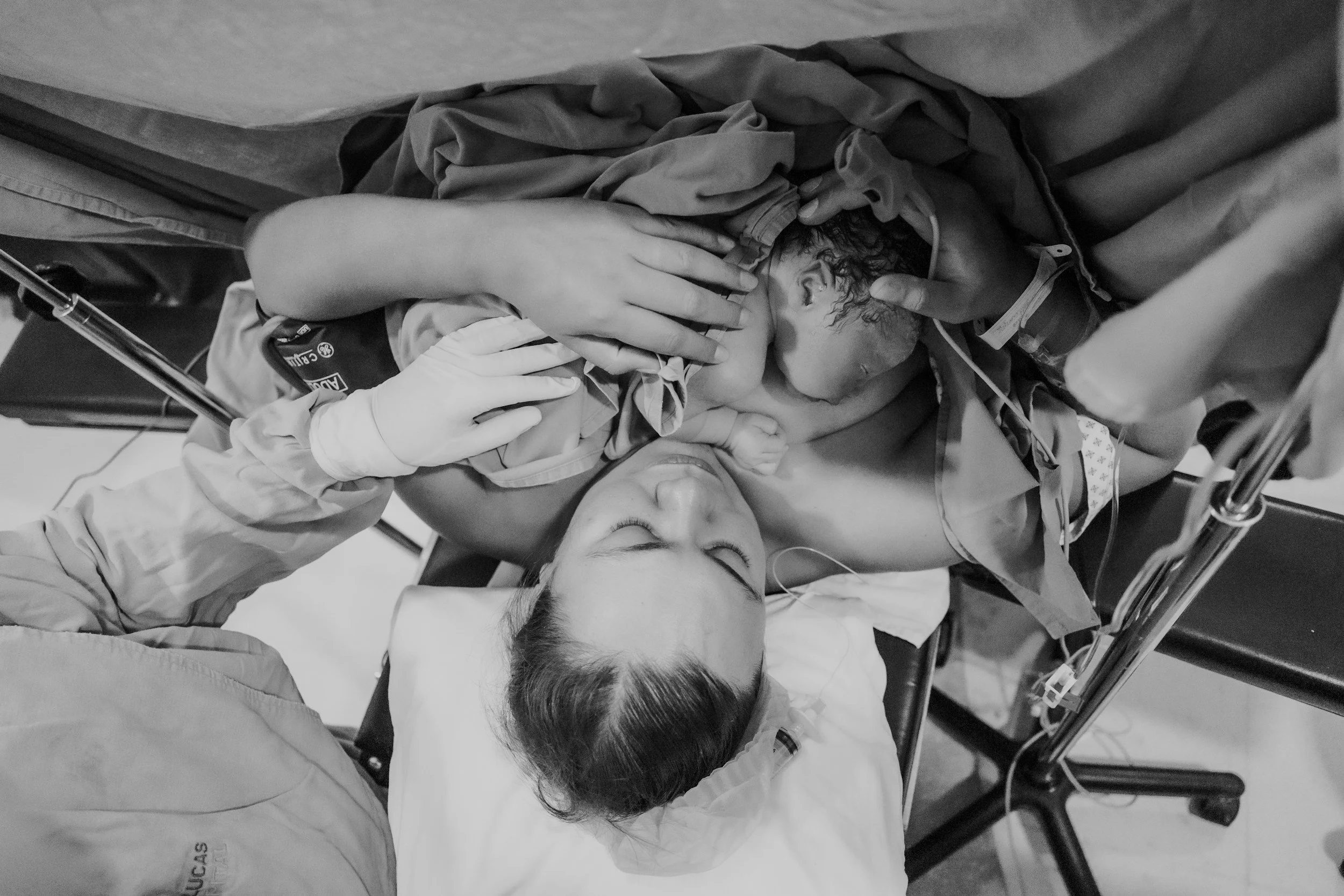
Our California & Florida EMDR Therapists
-

Alexis Harney, LMFT
California & Florida
EMDRIA Certified Therapist™
-

Daniella Mohazab, AMFT
California
Certification in process
-

Laurel van der Toorn, LMFT
California, Colorado, Florida, Michigan, Texas & Washington
EMDRIA Certified Therapist™, EMDRIA Approved Consultant-In-Training™
-

Tatevik Sarkisian, AMFT
California
Certification in process

Our EMDR therapists have all completed an extensive EMDRIA-approved training course and engage in ongoing consultation with EMDRIA-approved consultants to be sure we are offering the absolute best care.
Our licensed providers are EMDRIA Certified Therapists™ and our pre-licensed therapists are more than halfway through the certification process.
Our style of EMDR therapy is designed to be human-centered, grounded in relationship, and not feel too clinical or mechanical.
How EMDR Therapy Helps With Birth Trauma
EMDR (Eye Movement Desensitization and Reprocessing) is a structured, evidence-based therapy that works by targeting the specific memories that are stored in a traumatic, unprocessed state and helping the brain finish the job it couldn't complete at the time.
Unlike talk therapy, EMDR doesn't require a client to describe what happened in detail or revisit the narrative repeatedly. The work happens through bilateral stimulation, typically alternating eye movements, taps, or tones, while holding the memory in mind. This appears to activate the brain's natural processing system, allowing traumatic memories to be integrated rather than kept at arm's length or constantly intruded upon.
For birth trauma, this often means processing specific moments from labor, delivery, the hospital, or the postpartum period that carry the most distress. It can also mean addressing the beliefs that got attached to the experience: that the body failed, that something is permanently wrong, that the next pregnancy will also go wrong, that what happened was the person's fault.

The EMDR process for birth trauma typically follows this sequence:
History taking and assessment: the therapist maps the relevant experiences, identifies the specific targets for processing, and assesses the client's current symptoms and nervous system capacity
Preparation: the client builds resourcing skills, coping strategies, and stabilization before any active trauma processing begins; this phase is not skipped
Active processing: targeting specific memories with bilateral stimulation, allowing them to move from their raw state toward integration
Installation and closure: reinforcing adaptive beliefs that have emerged through processing, and ensuring the client can leave sessions feeling grounded
The VA, the World Health Organization, and the American Psychological Association all recommend EMDR as an evidence-based treatment for PTSD, the diagnostic category that birth trauma most often falls under when it is formally assessed. [EMDRIA](https://www.emdria.org), the international organization for EMDR clinicians, also maintains standards and research around EMDR's application to perinatal trauma specifically.
Alexis Harney, LMFT, EMDRIA Certified Therapist
Alexis is an EMDRIA Certified Therapist who specializes in attachment wounds, somatic and mind-body concerns, and the long-term effects of experiences that get lodged in the nervous system. She sees clients online throughout California and Florida.
Birth Trauma and Subsequent Pregnancies
One of the most common presentations in the practice is a person who had a traumatic first birth and is now pregnant again, or considering another pregnancy, and finding that the fear is already louder than the hope.
This makes neurological sense. When the nervous system has encoded a threatening experience, it prepares itself for potential repetition. Another pregnancy is not just an exciting possibility. For a body carrying unresolved birth trauma, it is a proximity to the thing it survived.
EMDR is particularly well suited to this situation because it can address the original traumatic memory while also targeting the anticipatory fear: the beliefs about what will happen again, the body-level bracing, the intrusive scenarios the mind generates as it tries to prepare.
Many clients who complete EMDR processing before or during a subsequent pregnancy report that the second birth feels categorically different, not just because it went differently, but because they were able to be present for it rather than braced against the memory of the last one.
Daniella Mohazab, AMFT
Daniella works with adults processing the aftermath of experiences that changed something about how they move through the world, including birth trauma and perinatal loss. Direct and goal-oriented, she helps clients get to the core of what's keeping them stuck. She sees clients online throughout California.
What happened will never be okay. But you can be okay even though it happened.
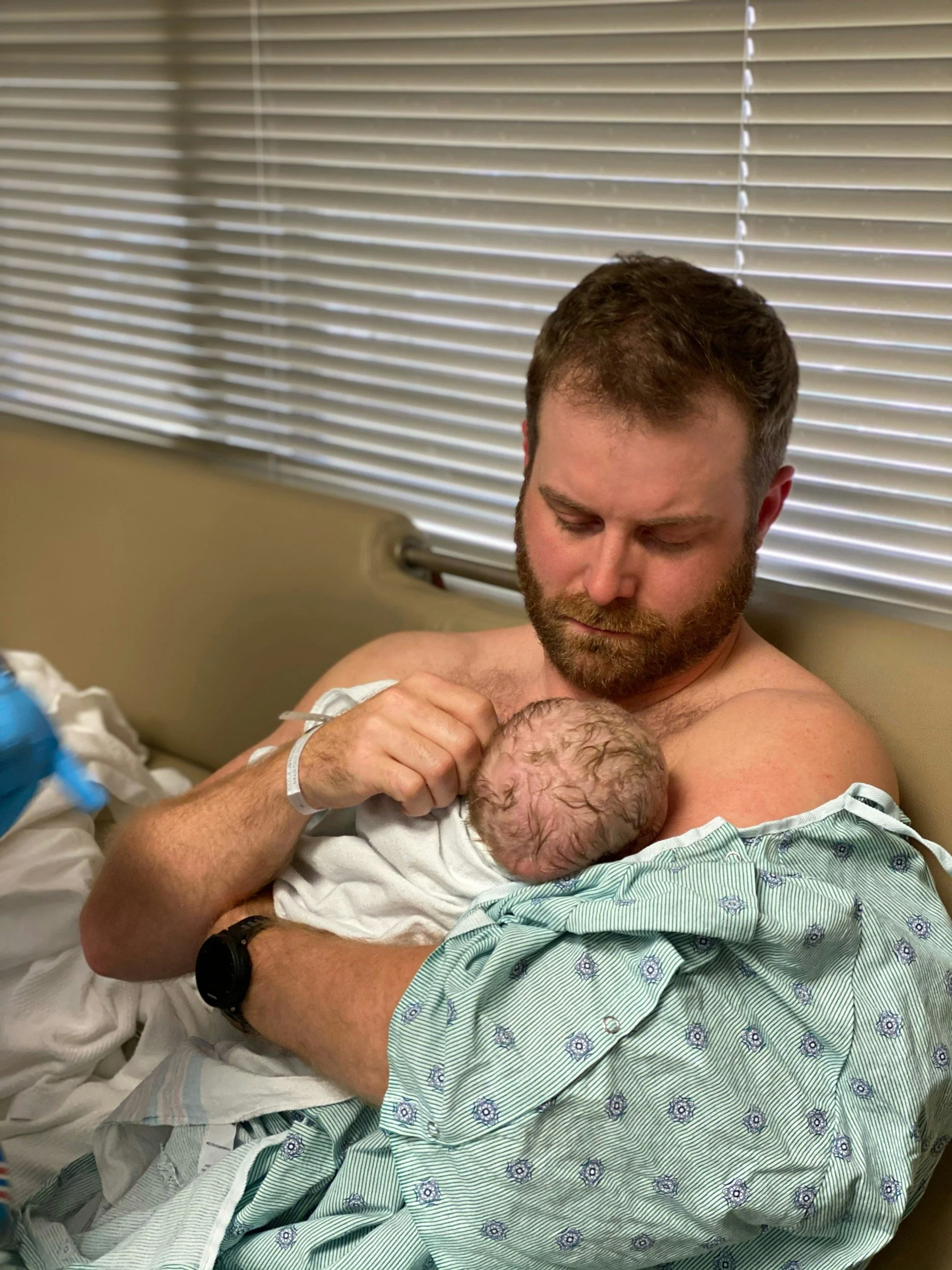
When the Trauma Belongs to the Partner
David* was present for his wife's delivery when her condition deteriorated quickly. He watched medical staff rush into the room. He watched his wife lose consciousness briefly. He held the baby in the first hour and described feeling like he was in a dream he couldn't wake up from.
His wife recovered fully. He didn't tell her how he felt, because it seemed clear to him that she had been through the real thing and he had only watched. He spent several months managing through work, helping at home, and not bringing it up. His sleep was fragmented. He was short-tempered in ways he didn't recognize as related to what had happened.
He came to therapy at his wife's suggestion after she noticed he would leave the room whenever birth came up on television. He was surprised when the therapist identified what he was describing as a trauma response. He had assumed that witnesses didn't get to have those.
Witnessing a life-threatening event that involves someone you love is a recognized pathway to PTSD. EMDR processed the specific moments that had lodged most deeply: the instant the room changed, the sounds, the helplessness. His sleep improved. The hypervigilance lessened. He and his wife were able to talk about the experience together for the first time.
*Name and identifying details changed.
Tatevik Sarkisian, AMFT
Tatevik works with adults processing difficult experiences that have stayed in the body long after the event is over, including the layered grief and anxiety that can follow complicated pregnancies, pregnancy loss, and postpartum periods. She sees clients online throughout California.

Myth: Partners and support people don't need their own treatment.
Reality: A support person who witnesses a frightening birth can develop their own trauma response. Their experience is real and treatable. Leaving it unaddressed can affect the partnership, the parenting relationship, and the individual's wellbeing.
Birth Trauma Is Treatable
The fact that birth trauma often goes unrecognized, or gets filed under postpartum depression or anxiety and treated accordingly, means that many people spend longer than necessary managing symptoms that could be addressed more directly.
EMDR therapy for birth trauma is not about relitigating what happened or deciding whether the experience was bad enough to count. It is about identifying where the nervous system got stuck and giving it what it needs to process and move forward.
The experiences covered in this post: complicated deliveries, difficult prenatal news, pregnancy loss, NICU stays, postpartum PTSD, partner trauma, anxiety in a subsequent pregnancy, are all within the scope of what EMDR addresses well. None of them require a formal PTSD diagnosis to warrant treatment. The presence of ongoing distress is sufficient.
Common Misconceptions About Birth Trauma
Myth: If the baby is healthy, the birth wasn't traumatic.
Reality: Infant outcome and maternal trauma are separate variables. A healthy baby is not evidence that the person who delivered that baby is okay. Many people experience significant trauma responses after births with good outcomes.
Myth: Birth trauma only counts if something went medically wrong.
Reality: Trauma is about the internal experience, not the external event. Feeling dismissed, unheard, out of control, or alone during labor can produce a trauma response even when no emergency occurred.
Myth: It will get better on its own with time.
Reality: Some people's nervous systems do integrate difficult birth experiences without treatment. For many others, untreated birth trauma persists for years, affects subsequent pregnancies, and can deepen rather than fade. Treatment produces faster and more complete resolution than waiting.
EMDR Therapy for Birth Trauma in California and Florida
Laurel Therapy Collective is a fully virtual therapy practice based in San Francisco and Los Angeles. All of our clinicians work with birth trauma using EMDR as the primary approach. We work with birthing parents, partners, and support people dealing with the aftermath of difficult birth experiences, pregnancy loss, NICU stays, and anxiety in subsequent pregnancies.
If what you've read here resonates, you can schedule a free 20-minute consultation at laureltherapy.net/book-appointment. We'll talk through what you're experiencing and whether our approach is a good fit.
Learn more about EMDR and trauma at laureltherapy.net/emdr-and-trauma.

Additional Vignettes
Vignette A: When Grief and Trauma Overlap
Sofia* terminated a wanted pregnancy at 22 weeks after receiving a diagnosis of a fetal anomaly incompatible with life. The medical process was clinical and careful. Her providers were kind. She described the experience as something she had handled, past tense, until she found herself unable to be in a hospital without her chest closing, or to attend a baby shower without dissociating for hours afterward.
What she was carrying was not just grief, though grief was certainly present. It was also the traumatic encoding of what had happened to her body during the termination procedure, the images from the ultrasounds, the specific words the specialist had used. These were stored in a way that kept them fresh and reactive rather than fully past.
EMDR allowed her to process the traumatic layer of the experience without being required to resolve the grief first. The two are related but distinct. As the trauma processing progressed, she found that the grief became more accessible and more bearable, something she could sit with rather than something that ambushed her.
*Name and identifying details changed.
Vignette B: A Different Second Pregnancy
Priya* had spent 11 months avoiding thinking about her first delivery, which had included a cascade of interventions she hadn't anticipated and hadn't consented to in the way she'd imagined. Her baby was healthy. Her recovery was typical. She had been told multiple times that everything had gone well.
When she became pregnant a second time, the fear arrived immediately. Not abstract worry, but specific images and body memories from the first birth returning with urgency. She came to therapy at 10 weeks, describing herself as dreading a pregnancy she had wanted.
EMDR processing began with the first birth, targeting the specific moments that carried the most charge. As those cleared, the practice shifted to the anticipatory fear: what she expected would happen again, what her body was bracing for, the beliefs about whether she would be heard this time.
She delivered her second child at 38 weeks. She described the experience as entirely different. Not easier necessarily, but something she was able to be present for. She was able to advocate for herself in the delivery room. When something happened that differed from her plan, she was able to adjust rather than freeze.
*Name and identifying details changed.
FAQs: EMDR Therapy

-
Birth trauma refers to a trauma response following a birth-related experience: labor, delivery, pregnancy complications, pregnancy loss, a NICU stay, or the postpartum period. It is defined not by the medical severity of what happened but by how the nervous system registered the experience. Someone can develop birth trauma after an objectively uncomplicated birth if the internal experience involved fear, loss of control, or feeling unsafe or unheard. The diagnostic category most relevant to birth trauma is PTSD, though many people carry birth-related trauma without ever receiving a formal diagnosis.
-
EMDR therapy for birth trauma takes at minimum eight sessions; that is the floor, not the typical timeline. The actual length depends on several factors: the number of traumatic events being addressed, whether there is a prior trauma history that intersects with the birth experience, the client's current stabilization and nervous system capacity, and what comes up during processing. Some clients complete birth trauma work in three to five months of weekly therapy. Others, particularly those with complex histories or multiple perinatal losses to process, work longer. The therapist and client assess progress together throughout.
-
Yes, with an important nuance. EMDR for pregnancy loss addresses the traumatic layer of the experience: the specific moments, images, body memories, and intrusive thoughts that have stayed stored in an unprocessed state. It does not resolve grief, which is a separate process that unfolds over time. What many clients find is that processing the trauma makes the grief more bearable and more accessible. When the traumatic charge is reduced, grief can move rather than stay locked alongside the intrusive, reactive symptoms of trauma.
-
Sometimes, yes. A partner or support person who witnesses a frightening birth, particularly one involving an emergency, can develop their own trauma response. This is recognized clinically and is treatable with EMDR in the same way other trauma responses are. Partners often minimize their own experience because the birthing parent was the one in physical danger, but witnessing a life-threatening situation involving someone you love is a legitimate pathway to PTSD. Untreated partner trauma can affect the parenting relationship, the partnership, and the individual's general functioning.
-
EMDR can be conducted during pregnancy, and for someone carrying significant unresolved birth trauma into a subsequent pregnancy, the case for beginning treatment promptly is often strong. The therapist will be thoughtful about pacing and stabilization, and the preparation phase is particularly important when a client is currently pregnant. There is no contraindication to EMDR during pregnancy, and for many clients, processing earlier birth trauma during a subsequent pregnancy significantly improves the experience of that pregnancy and delivery. This is a conversation to have directly with your therapist based on your specific situation.

Our Practice Is Completely Therapist-Owned & Operated
AI is never in the therapy room. Everything is personalized to you
NO data sales - your privacy is paramount
NO venture capital funding - we focus on you instead of satisfying investors
Healing happens in authentic relationships.
Everything we do is human on purpose.

A Message From Our Director On The Power of EMDR Therapy
I was introduced to EMDR in graduate school, right as it was being widely popularized in the media by celebrities. I was intrigued; the combination of its novelty and proven neuroscientific efficacy was compelling.
I’ll be real with you, EMDR therapy looks pretty odd from the outside. It even feels odd as you’re going through it. But the results don’t lie.
The training a therapist goes through to provide EMDR therapy is lengthy and personal. We undergo our own EMDR during training intensives. In training, I was able to process some medical trauma, as well as a serious car accident I was in between training sessions. The healing I experienced was so complete and profound, I was sold.
I knew from those early training days that EMDR therapy would be a foundational offering in my career. I have never met someone who doesn’t have some kind of trauma, and EMDR is too powerful a tool not to offer to anyone who wants it. I have ensured that all therapists in my practice receive the highest quality EMDR training so we can help as many people with it as possible.
If you’re considering EMDR therapy, know that it can be an intense and vulnerable process. But with the right EMDR therapist and the right preparation and targeting, it is highly rewarding.
May it bring you as much relief as it has me.
- Laurel
When you heal your trauma, you improve your relationships, your health, your productivity, and overall well-being.

How EMDR Therapy Works
Understanding Bilateral Stimulation
Aside from being a highly effective trauma therapy, EMDR therapy is best known for one thing: bilateral stimulation. In other words, side-to-side movement. This can be done with eye movement, sounds, or tapping.
Bilateral stimulation looks and feels weird, and we understand if some people are skeptical. We were skeptical too, at first. But the science is clear: stimulating both sides of your brain helps you build new neural connections. This means you can re-wire your brain to heal your trauma.
If you want to learn more about the science behind why bilateral stimulation works, you can find more information from EMDRIA.
What Does Bilateral Stimulation Look Like With Online EMDR?
We love helping people process their trauma from the comfort of their home. For many people, it makes revisiting trauma easier and feel safer. We still have all methods of bilateral stimulation available to us through technology. Most of the time, we rely on manual bilateral stimulation, aka the “butterfly hug.” The butterfly hug is done by holding your arms right below the shoulders and tapping your hands side to side. Your EMDR therapist will tell you when to start and stop. If this doesn’t work for you, we’ll try sounds, remote-controlled buzzers, or visual stimulation.
Rest assured, EMDR therapy and bilateral stimulation are still effective when done remotely.


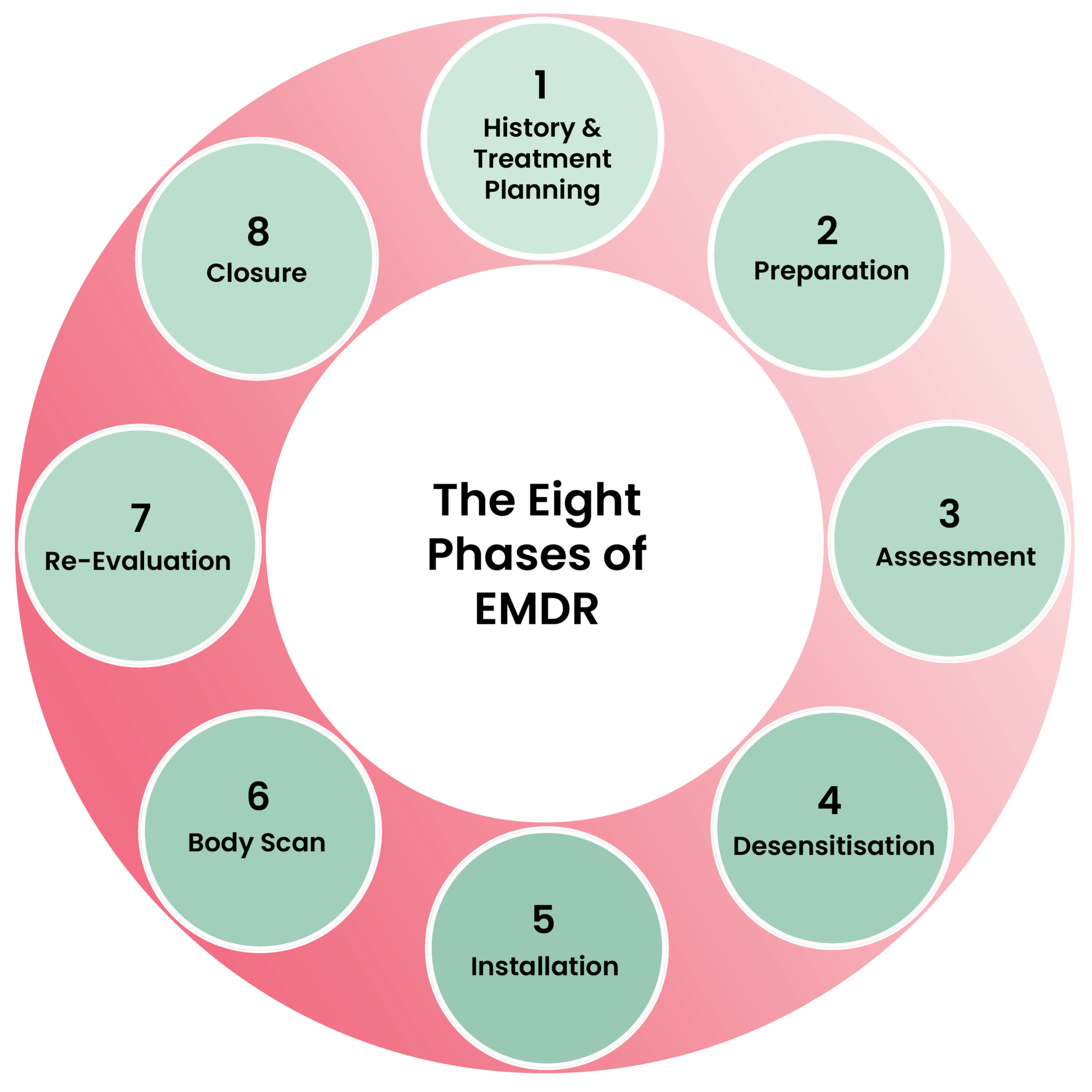
What Do The Different Phases of EMDR Therapy Look Like?
History taking: In the first phase of EMDR therapy, your EMDR therapist will ask you questions about your social, developmental, emotional, and mental health history and the traumas you have experienced. If your EMDR therapist skips history taking, proceed with caution.
Preparation and resourcing: In the second phase, your EMDR therapist will teach you some coping and self-soothing techniques to use during processing sessions, as well as identify positive influences, experiences, and resources that will help you. This might take one session or many sessions. Resourcing is vitally important to the success of EMDR therapy and shouldn’t be skipped.
Assessment: In this phase of EMDR therapy, your EMDR therapist will assess which trauma or traumas will be targeted during treatment. You’ll get a say in where you start.
Desensitization: This 4th phase is the heart of EMDR therapy. During this phase, your EMDR therapist will help you process the targeted trauma or traumas with bilateral stimulation. At Laurel Therapy Collective, we usually have you do your own tactile stimulation, aka tapping your arms side to side, but have other options as well. The goal of this phase is to reduce your symptoms of distress so that you can eventually think about the trauma without feeling overwhelmed by negative emotions.
Installation: In the 5th phase of EMDR therapy, your EMDR therapist will help you develop positive beliefs about yourself to replace any negative beliefs that resulted from the trauma (e.g., "I am not a bad person").
Body scan: In the 6th phase of EMDR therapy, you will check in with your body to see if there are any residual physical symptoms remaining from the trauma (e.g., tightness in your chest).
Closure: In the 7th phase of EMDR therapy, your EMDR therapist will help you develop a plan for managing any residual symptoms so that they do not interfere with your daily life.
Reevaluation: In this final phase of EMDR therapy, you and your EMDR therapist will assess your progress to see if any additional sessions are needed based on your goals.
Other Trauma-Informed Therapy Services in California & Florida
Discover the possibilities of online therapy at Laurel Therapy Collective. Our dedicated team of therapists is well-versed in addressing a wide range of mental health issues, ensuring tailored support for each person. From anxiety to LGBTQ gay and lesbian therapy, couples' therapy, therapy for lawyers, holistic therapy, EMDR therapy, Enneagram therapy, therapy for young adults, therapy for burnout, trauma therapy, and the challenges faced by teenagers, we've got you covered. We serve Santa Cruz, Los Angeles, and San Francisco, and all of California and Florida. Our approach is rooted in affirming your identity, promoting anti-racism, body positivity, and sex positivity. We would be glad to talk with you.